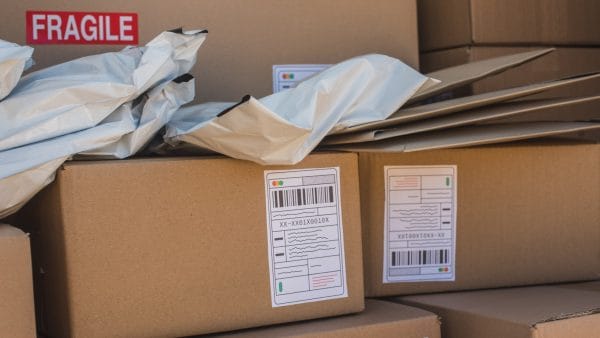
How to send food abroad: rules and packaging

We usually send food for one of two reasons: a parcel of home-made and local products for our loved ones, or product samples for customers. In both cases three questions decide whether the shipment succeeds: what is allowed in the destination country, how the parcel is packed and which documents are needed.
What food is allowed abroad
The rule depends first on whether the destination is in the European Union.
- Within the EU: packaged food that keeps at room temperature usually travels without customs formalities. Perishables, such as fresh meat, fish or fresh dairy products, need continuous refrigeration and are not suited to an ordinary parcel.
- Outside the EU (England, Switzerland, the USA, Canada, Australia): each country decides what may enter. Meat and meat products, dairy products, fresh fruit and vegetables, seeds and plants are often restricted or banned.
- United States: the framework for importing food is strict and, depending on the type of product and the purpose of the shipment, extra declaration requirements apply. Tell us what you are sending and we will tell you what is needed.
Before you pack, check the rules of the destination country or ask us: a parcel that customs do not accept is returned or delayed.
Which shipping method fits
- Products that keep at room temperature (tinned food, jars, honey, spoon sweets, nuts, rusks, pasta, dried goods): sent as a parcel. See food shipping and parcel shipping abroad.
- Olive oil: travels in suitable containers with special packaging. All the details under olive oil transport.
- Products that need continuous refrigeration: the refrigerated transport service covers Attica and Messinia. See temperature-controlled freight.
How to pack food
- Choose products in tins, or in airtight or vacuum packaging. Solid foods, such as biscuits and nuts, travel most safely.
- Wrap glass jars and bottles one by one in bubble wrap and place them in a double-wall cardboard box.
- Fill every gap with paper or bubble wrap, so that the products cannot move inside the box.
- Put liquid and oily products in a second bag, so that a possible leak does not stain everything else.
- Seal the box with wide tape in an “H” shape and write the recipient’s address clearly.
Which documents you need
For a private parcel, prepare a list of the contents: type, quantity and value of each product. For a commercial shipment you need an invoice and, depending on the country and the product, health certificates or phytosanitary documents. Requirements differ by destination, so ask us before you send.
Cost and delivery
The cost depends on the weight, the volume of the parcel and the destination. The delivery date is given together with the price. You see the exact amount in the cost calculator, before you send.
Sending food with Spourgitis
Spourgitis has been sending food and local products abroad since 1943. We collect from your home and keep you updated at every step. Start from the food shipping page or choose a destination: parcel to Germany, parcel to the UK, parcel to the USA.
Frequently asked questions
Can I send fresh products abroad?
It depends on the product and the destination. Perishable products need continuous refrigeration and are often not allowed outside the EU. For products that keep at room temperature, shipping is simple.
What rules apply to food sent to the USA?
The USA has strict rules on food imports, especially for perishables. Tell us what you are sending and we will tell you what is needed before you send.
Can I send olive oil?
Yes, in suitable packaging. See the page on olive oil transport.
How long does a food shipment take?
The delivery date is given together with the price, because it depends on the destination and the shipping method.
Do I need a contents list?
Yes. Write down the type, quantity and value of each product. Customs and the recipient often ask for it.